Author: BetterFindsUK

  • Best Under-Bed Storage for Small Bedrooms: A Practical UK Buying Guide

    Best Under-Bed Storage for Small Bedrooms: A Practical UK Buying Guide

    The space beneath a bed can be valuable storage, provided the container fits, opens easily and protects what is inside. We compared five useful formats for small British bedrooms, from rigid boxes to vacuum bags and divided shoe organisers.

    The quick answer

    Choose rigid Wham boxes for wipe-clean protection, Amazon Basics fabric bags or Lifewit containers for soft furnishings, vacuum bags when maximum compression matters, and the Onlyeasy divided organiser for shoes.

    This article contains affiliate links. As an Amazon Associate I earn from qualifying purchases.

    Our five practical picks

    ProductBest forKey consideration
    Amazon Basics vacuum bagsBulky beddingLess convenient for frequent access
    Amazon Basics under-bed bagsEveryday flexible storageMeasure the filled height
    Lifewit 95L containersHigh-capacity textile storageLarge stated capacity needs enough floor space
    Wham Crystal 32L boxesRigid, wipe-clean storageRequires about 18 cm clearance
    Onlyeasy shoe organisersKeeping pairs separatedLarge footwear may use extra compartments

    1. Amazon Basics Vacuum Compression Bags

    Best for maximum space saving. This five-pack of large compression bags includes an airtight valve and hand pump. It is a useful option for duvets, spare bedding and seasonal clothes when reducing volume is more important than quick daily access.

    • Why consider it: compresses bulky textiles and includes a hand pump.
    • Watch for: not ideal for items used frequently; check care instructions before compressing delicate or feather-filled products for long periods.

    2. Amazon Basics Under-Bed Storage Bags

    Best flexible all-round option. These foldable bags are intended for clothes, blankets and other soft items. Compared with a rigid box, a fabric bag is lighter and easier to store when empty.

    • Why consider it: lightweight storage for seasonal textiles.
    • Watch for: flexible bags can bulge when overfilled, so compare the product’s external dimensions with the clear space beneath your bed.

    3. Lifewit 95L Under-Bed Storage Containers

    Best for high-capacity textile storage. The stated 95-litre capacity makes this style suitable for spare bedding, blankets and seasonal wardrobes. The broad format is useful when you want fewer, larger containers rather than several small boxes.

    • Why consider it: generous capacity for soft household items.
    • Watch for: capacity alone does not guarantee a fit—verify the current listing’s complete external dimensions before ordering.

    4. Wham Crystal 32L Under-Bed Boxes, Set of 5

    Best rigid multipack. These clear, UK-made plastic boxes have lids and a low-profile 32-litre format. At approximately 60 × 40 × 18 cm each, they suit bedding, folded clothes, toys or shoes where dust protection and wipe-clean surfaces matter. Integrated sliders help with retrieval, but they are not wheeled drawers.

    • Why consider it: five matching transparent boxes that stack with their lids fitted and nest when empty.
    • Watch for: allow more than 18 cm of clear height and check central bed supports before buying.

    5. Onlyeasy Under-Bed Shoe Organisers, Set of 2

    Best for organised footwear. This set of two divided organisers is designed to hold up to 24 pairs in total. Each bag has a clear window and a linen-look black exterior, with listed dimensions of 29.3 × 23.6 × 5.9 inches (approximately 74.4 × 59.9 × 15 cm).

    • Why consider it: separate compartments keep pairs visible and stop shoes forming a loose pile.
    • Watch for: the stated capacity depends on footwear size; boots and bulky trainers may need more than one compartment.

    Measure before you shop

    Measure from the floor to the lowest part of the bed frame—not to the mattress. Check usable width and depth, allowing for a central support, skirting boards and bedside furniture. Leaving 2–3 cm of height clearance makes a container easier to retrieve without scraping the frame.

    • Clear height: must exceed the product’s external height.
    • Access direction: decide whether the container will pull out from the side or foot.
    • Floor type: small wheels or sliders behave differently on hard flooring and deep carpet.
    • Contents: rigid boxes protect crushable items; flexible bags suit textiles.

    Frequently asked questions

    Should under-bed storage be airtight?

    Not always. Store only clean, fully dry textiles. A sealed container can trap moisture that is already present.

    Are wheels worth having?

    They can help with heavy contents and frequent access, although very small wheels may struggle on deep carpet. Smooth integrated sliders are another option.

    What should not be stored under a bed?

    Avoid food, damp textiles, valuables, important documents and objects sensitive to changing temperature or humidity. Keep enough access to clean and inspect the area.


    Product specifications, availability and prices can change. Check the current Amazon listing and measure your space before purchasing. Practical Nest UK has not presented these products as personally tested.
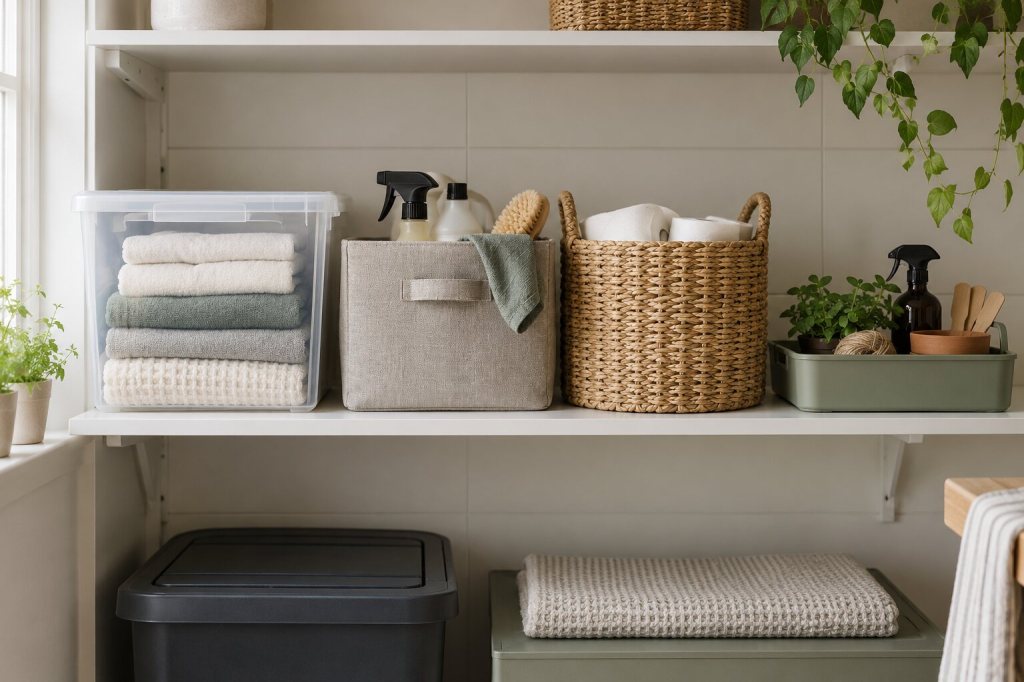
  • Renter-Friendly Storage Ideas That Leave Walls and Floors Intact

    Renter-Friendly Storage Ideas That Leave Walls and Floors Intact

    Renters often need more storage without permanent building work. The useful approach is to improve capacity with reversible solutions while protecting surfaces and following the tenancy agreement.

    Check the agreement first

    Before drilling, fixing furniture or applying adhesive products, check your tenancy terms and ask the landlord or agent when necessary. Even products described as removable can mark paint, wallpaper or varnish, so test them discreetly.

    Use freestanding height

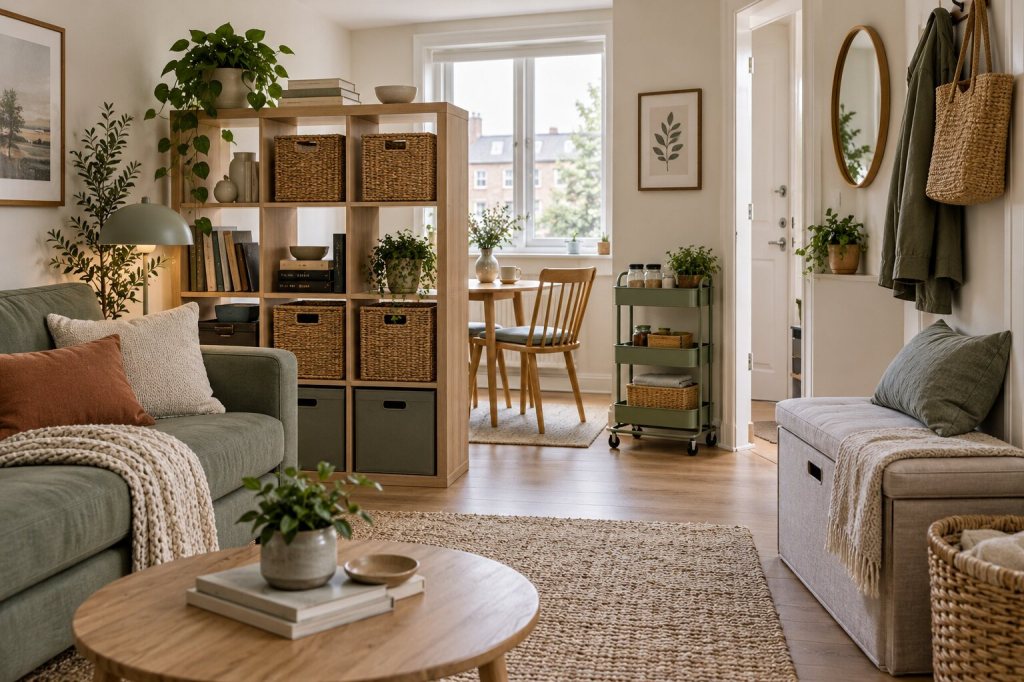
    A tall, narrow shelving unit can add capacity without a large footprint. Stability is essential: follow the manufacturer’s anchoring guidance, consider the wall material and obtain permission for required fixings. An unanchored tall unit may be unsafe.

    Improve existing cupboards

    • Removable shelf risers
    • Freestanding drawer units
    • Handled baskets for deep shelves
    • Non-fixed pan or lid racks
    • Tension rails used within their stated load limits

    Measure hinges, pipes and door closure as well as the empty shelf. Keep ventilation openings and maintenance access clear.

    Choose over-door storage carefully

    An over-door organiser can work for light items, but check door thickness, frame clearance and hinge capacity. Padding may reduce rubbing. Stop using it if the door strains, fails to close or becomes a safety concern.

    Select dual-purpose furniture

    A storage bench, drawer bed or coffee table with concealed capacity can reduce the number of pieces in a room. Confirm dimensions along the access route before buying and consider whether the item can move to a future home.

    Create zones with portable pieces

    A trolley can hold craft supplies, bathroom products or a home-working kit and move when needed. Boxes that fit standard shelving are easier to reuse than custom organisers designed for one awkward gap.

    Protect floors and surfaces

    Use suitable furniture pads and follow flooring-care guidance. Avoid trapping moisture beneath plastic storage, and do not overload suspended floors or shelves. Keep photographic records of the property’s condition where appropriate.

    Buy for the next home too

    Flexible dimensions, neutral finishes and replaceable components make storage more likely to survive a move. Before purchasing, ask whether the item solves a current daily problem and whether you would choose it again in a different room.

    Keep the system light

    Moving is easier when storage does not become permission to accumulate. Review each category before adding a container and keep some spare capacity for normal changes.


    Practical Nest UK publishes independent, practical guidance. Check measurements, materials and retailer terms before buying.

  • How to Choose Storage Boxes That Actually Fit Your Space

    How to Choose Storage Boxes That Actually Fit Your Space

    Storage boxes are useful only when they fit both the space and the job. A beautiful set that wastes half a shelf or hides frequently used items can make organisation harder. Start with the contents and the location, then choose the container.

    Measure three times

    • The available width, depth and height
    • Door, drawer or shelf-opening clearance
    • The internal dimensions required by the contents

    Product listings usually emphasise external dimensions. Thick walls, tapered sides, wheels and lids can reduce usable capacity. Leave enough clearance to grip and remove the box.

    Match access to frequency

    Open baskets suit frequently used, low-risk items. Lidded boxes protect occasional items from dust. Drawers can make stacked storage accessible without unbuilding a tower. Vacuum bags reduce soft-textile volume but may not suit every material.

    Choose material for the location

    Wipe-clean plastic can be practical in utility areas or under sinks, provided products are stored safely. Breathable fabric may suit dry wardrobe shelves. Cardboard is inexpensive but less suitable where moisture is possible. Natural baskets add texture but can snag delicate items and are often harder to clean.

    Think about visibility

    Transparent boxes reveal contents but can look busy. Opaque boxes create visual calm but need clear labels. A useful compromise is an opaque basket with a simple category label.

    Test stacking claims

    Check whether the box is designed to stack when full and whether the lid bears weight safely. Consider how you will reach the lowest container. Heavy items belong lower down, and tall stacks should never create a tipping risk.

    Avoid buying a complete set first

    Test one or two boxes in the real space. Load them, open the cupboard, remove them and put them back. If the system works for a week, buy only the additional quantity required.

    Calculate value properly

    Compare usable internal capacity, build quality, replacement availability and how often the box will be handled. The cheapest option is poor value if it cracks, deforms or cannot be cleaned. The most expensive option is unnecessary if a simple tray solves the problem.

    Label for future you

    Use categories rather than vague labels. “Winter accessories” is more useful than “Miscellaneous”. Date boxes containing children’s outgrown clothes or time-sensitive paperwork so that they are reviewed rather than forgotten.

    The right container makes retrieval easier. It should not merely make clutter rectangular.


    Practical Nest UK publishes independent, practical guidance. Check measurements, materials and retailer terms before buying.

  • Toy Storage in a Small Living Room: A Practical Family System

    Toy Storage in a Small Living Room: A Practical Family System

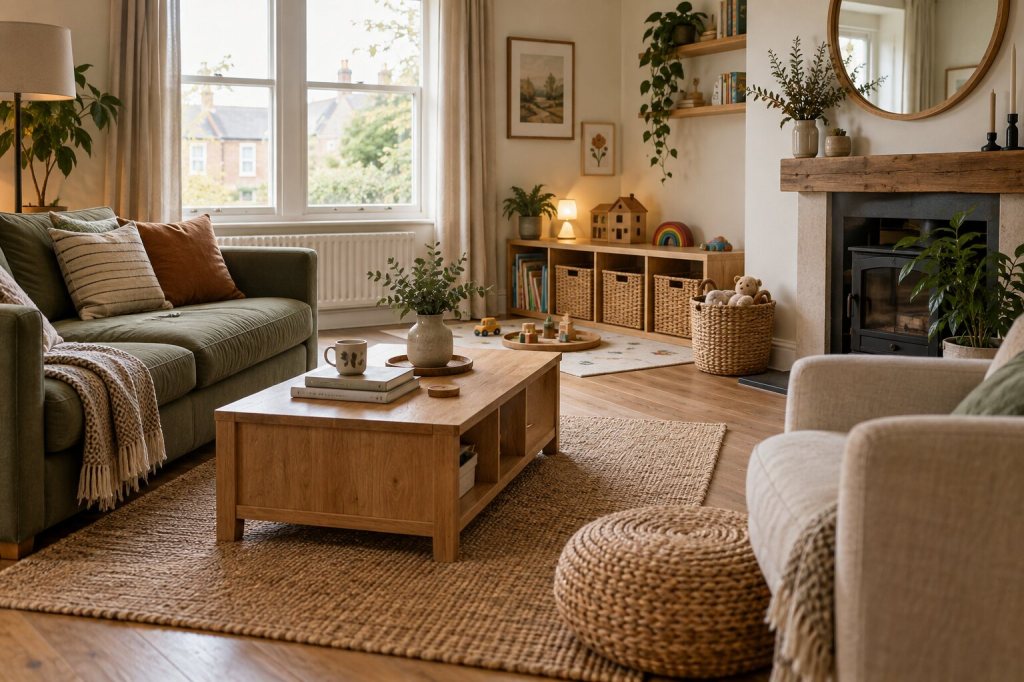
    A shared living room needs to work for play and for adult life. The goal is not to make toys invisible all day. It is to give children meaningful access while making the room straightforward to reset.

    Reduce before organising

    Remove broken toys, incomplete sets and items that are no longer age-appropriate. Keep favourites and open-ended toys easy to reach. Store sentimental items separately from everyday playthings.

    Use broad categories

    • Building toys
    • Vehicles
    • Pretend play
    • Puzzles and games
    • Creative supplies
    • Soft toys

    Very specific sorting creates too many decisions during tidy-up. Broad groups make it possible for a child to help and reduce the number of containers needed.

    Choose low, stable storage

    Low units allow children to see and return toys independently. Follow the furniture manufacturer’s instructions for wall fixing and loading. Avoid heavy objects on high shelves, unstable stacks and containers with lids that trap small fingers.

    Prefer fewer open choices

    Displaying every toy at once can make play and tidying harder. Keep a manageable selection available and rotate less-used items from secure storage. Rotation does not need a schedule; swap when interest drops.

    Use containers children can handle

    Lightweight baskets with open tops or easy handles reduce friction. A picture label can help younger children. Check that materials and dimensions are appropriate for the child’s age and that small components are stored safely.

    Protect the adult zone

    Choose one boundary, such as a cabinet, two shelves or a defined corner. When the allocated area is full, rotate or reduce rather than extending storage across the room.

    Create a simple reset

    Use a short cue before dinner or bedtime and tidy one category at a time. Adults can gather pieces while children return baskets. Five consistent minutes are more effective than an occasional, exhausting sort.

    Allow play to continue

    Not every construction must be dismantled immediately. A tray or small designated surface can hold one work in progress. This respects the play while keeping the floor and main surfaces usable.

    Toy storage must always suit the child’s age and follow product safety and anchoring instructions.


    Practical Nest UK publishes independent, practical guidance. Check measurements, materials and retailer terms before buying.

  • How to Organise a Linen Cupboard Without Perfect Folding

    How to Organise a Linen Cupboard Without Perfect Folding

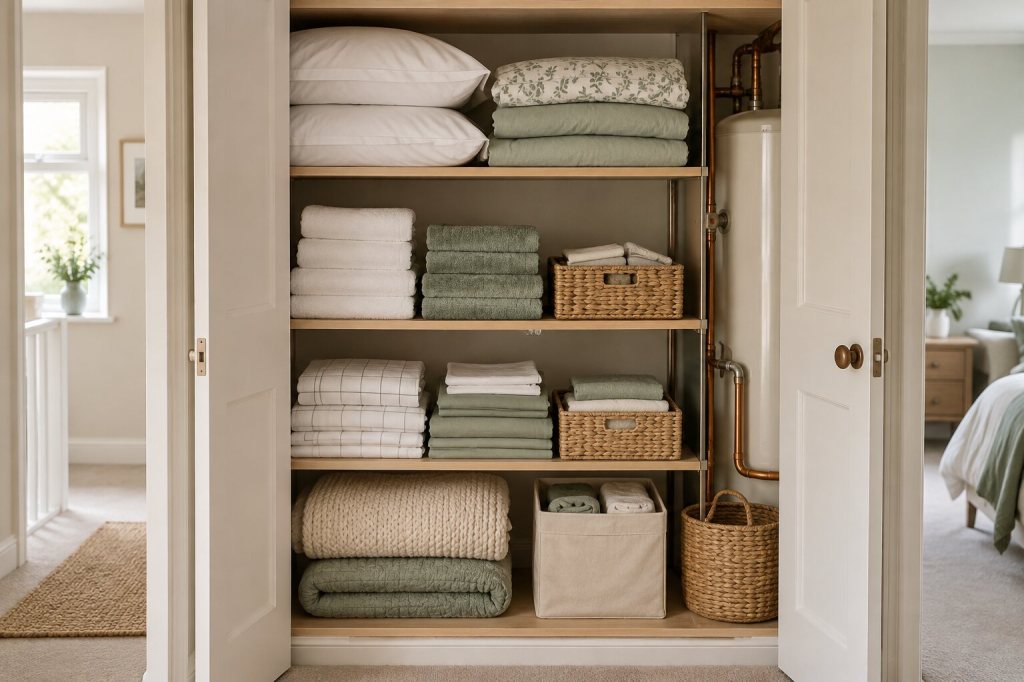
    A useful linen cupboard makes it obvious where clean bedding and towels belong. It does not require hotel-style folds or rows of decorative labels. Consistent categories and reasonable quantities matter more.

    Take stock by household need

    Group fitted sheets, duvet covers, pillowcases, bath towels, hand towels and guest items. Remove worn-out pieces, unmatched items you will not use and sizes that no longer fit any bed.

    Set sensible quantities

    Many households manage well with two complete bedding sets per bed: one in use and one ready. Your needs may differ if laundry is less frequent, guests stay often or young children require spares. The point is to choose a number deliberately.

    Keep sets together

    Fold each bedding set and place it inside one matching pillowcase, or assign each bed a labelled shelf or basket. Either approach prevents the search for a matching component. Label by bed or mattress size rather than by colour alone.

    Use shelves by frequency

    • Everyday towels and current bedding at easy-reach height
    • Guest bedding above or below the main zone
    • Seasonal duvets on the highest shelf if safely accessible
    • Cleaning cloths in a separate, clearly marked container

    Avoid packing shelves tightly. You need enough room to remove one stack without collapsing the others.

    Manage deep shelves

    Deep cupboards often work better with handled baskets that can be pulled forward. Measure shelf depth, width and height before buying. A basket should fit the folded item, not force the item into an awkward shape.

    Store textiles properly

    Make sure linens are completely dry before storing them. Allow air circulation and follow care instructions for duvets and specialist materials. Avoid long-term storage in airtight plastic if the manufacturer advises breathable conditions.

    Use labels as directions

    Simple labels such as King Bedding, Single Bedding, Bath Towels and Guests help every household member put things away. If a label does not change behaviour, it is decoration rather than a system.

    Review at laundry time

    When clean linen no longer fits comfortably, do not create a new pile. Check whether damaged or surplus items can be repurposed, donated where accepted, or recycled through an appropriate textile scheme.


    Practical Nest UK publishes independent, practical guidance. Check measurements, materials and retailer terms before buying.

  • Hallway Storage Ideas for a Calm and Functional Entrance

    Hallway Storage Ideas for a Calm and Functional Entrance

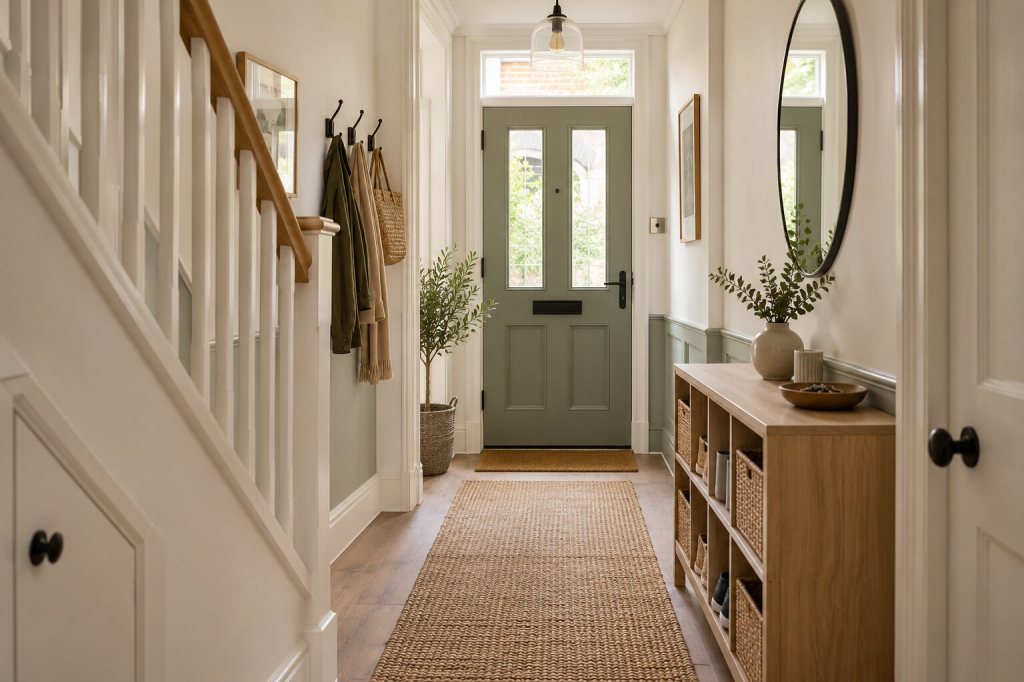
    A hallway has to support departures, arrivals, deliveries and the things everyone carries. Because it is also the first view of the home, even a small amount of clutter can feel disproportionate. The answer is to give the most frequent items a clear landing place.

    Observe the traffic first

    For several days, notice what is dropped by the door and where people naturally reach. Storage placed against those habits is unlikely to last. The useful system belongs on the route between the door and the rest of the home.

    Define the essential zones

    • A limited number of everyday coats
    • Shoes currently in rotation
    • Keys, passes and small essentials
    • Incoming post or parcels
    • Bags used most days

    Move off-season coats, occasional shoes and archives elsewhere. The hallway should support the current week rather than store the entire household.

    Choose narrow storage

    In a tight entrance, shallow shoe cabinets and wall-mounted hooks can preserve walking space. Check door swing, radiator clearance and the width required to carry shopping through the hall. Furniture must be stable and fixed to the wall where the manufacturer requires it.

    Control shoes

    Give each person a clear limit such as one basket, shelf or row. Wet footwear needs ventilation and a surface that can be cleaned. A boot tray can protect the floor, but it should not become permanent storage for unused pairs.

    Create a landing spot

    Use a small bowl, tray or wall organiser for keys and passes. Keep the category narrow; a general-purpose basket soon fills with receipts, batteries and unrelated objects. Deal with post daily and recycle unwanted paper promptly.

    Make leaving easier

    A mirror, a reliable key location and a hook for the next day’s bag can remove repeated morning searches. If children use the space, place their hooks at a practical height and label them simply.

    Reset in two minutes

    At the end of the day, return shoes, hang coats and empty the landing tray. Once a week, remove items that have migrated into the hall. The best entrance system is one the household can reset faster than it can make tea.

    Keep the escape route and access to the front door clear at all times.


    Practical Nest UK publishes independent, practical guidance. Check measurements, materials and retailer terms before buying.

  • How to Build a Cleaning Caddy You Will Actually Use

    How to Build a Cleaning Caddy You Will Actually Use

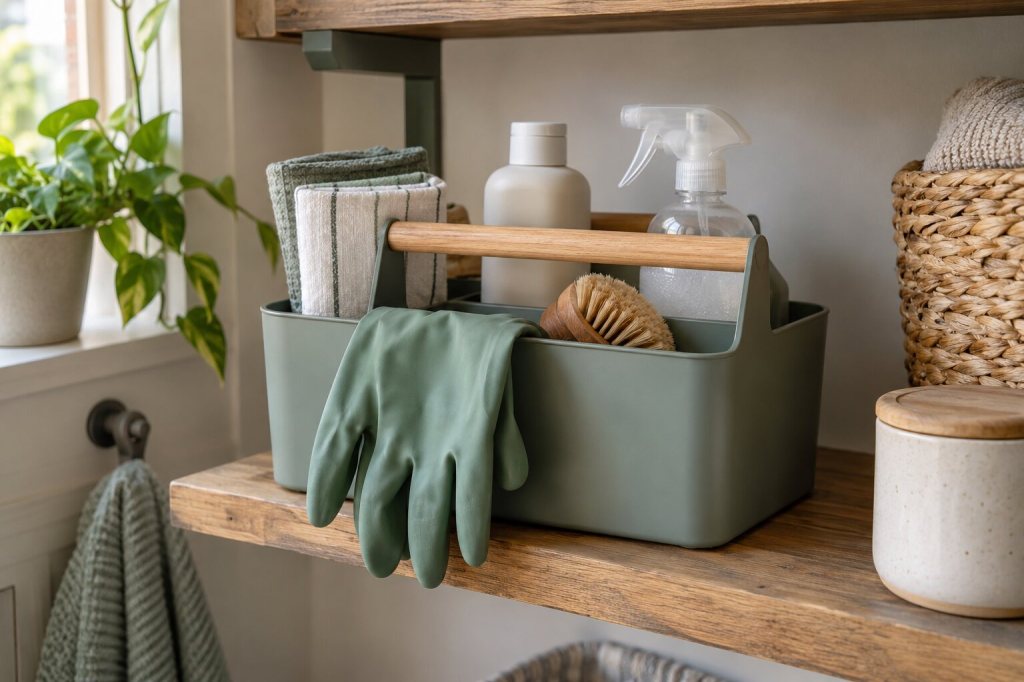
    A cleaning caddy reduces the friction of starting: the basic tools are together, visible and ready to move. The most effective version is light enough to carry and limited to products you genuinely use.

    Choose the right container

    Look for a sturdy handle, a wipe-clean surface and compartments that keep bottles upright. Check its filled weight, not just its empty size. A compact caddy is usually easier to use than a large one packed with backups.

    Start with a minimal kit

    • Microfibre or reusable cleaning cloths
    • A non-scratch sponge
    • A small detail brush or old toothbrush
    • General-purpose cleaner suitable for your surfaces
    • Glass cleaner if needed
    • Protective gloves
    • A small rubbish bag

    Different surfaces may require specific products. Check manufacturer instructions for stone, wood, screens and specialist finishes before applying a cleaner.

    Avoid unsafe combinations

    Never mix cleaning chemicals. Keep products in their original, labelled containers and follow ventilation, dilution and protective-equipment instructions. Store the caddy securely away from children and pets.

    Give cloths a system

    Use different cloth colours for different areas if that helps prevent cross-contamination. Keep clean and used cloths separate, and wash them according to their care labels. Do not return a damp cloth to a closed caddy.

    Keep bathroom tools separate when sensible

    Some households prefer a dedicated bathroom caddy. This can reduce carrying and keep toilet-area tools separate from kitchen cleaning items. A second caddy is useful only if both remain simple.

    Use a repeatable route

    Work from high to low and from cleaner areas towards dirtier ones. Collect rubbish, dust, wipe surfaces and finish with the floor. A consistent order reduces missed areas and unnecessary repetition.

    Restock lightly

    Refill or replace empty essentials after cleaning, but keep bulk bottles in secure storage. Review the caddy every month and remove unused products. If a bottle has lived there untouched for six months, it probably does not need to travel with you.

    Make starting easier

    Store the caddy near the place where cleaning usually begins. Pair it with a ten-minute reset rather than waiting for an ideal afternoon. A small kit used regularly is more effective than a perfect collection kept in a cupboard.


    Practical Nest UK publishes independent, practical guidance. Check measurements, materials and retailer terms before buying.

  • Under-Sink Organisation: A Safe and Practical Setup

    Under-Sink Organisation: A Safe and Practical Setup

    The cupboard beneath a sink is awkward by design: pipes interrupt the space, moisture is possible and cleaning products often vary in size. A safe setup begins with access and visibility, not with squeezing in as much as possible.

    Empty and inspect

    Remove everything, check for leaks, dampness or damaged surfaces, and clean the cupboard. If there is an active leak, deal with it before adding liners or storage. Keep access to stopcocks, traps and pipework.

    Remove unsuitable items

    Do not store food, medicines or anything easily damaged by moisture beneath the sink. Follow every product label. Keep hazardous cleaning products in their original containers and out of reach of children and pets, ideally in a locked location where required.

    Group by purpose

    • Daily washing-up supplies
    • General surface cleaning
    • Dishwasher products
    • Spare sponges and cloths
    • Bin liners and small household supplies

    Avoid combining chemicals or transferring them to unlabelled bottles. Products that should not be used together must remain clearly identifiable.

    Use removable storage

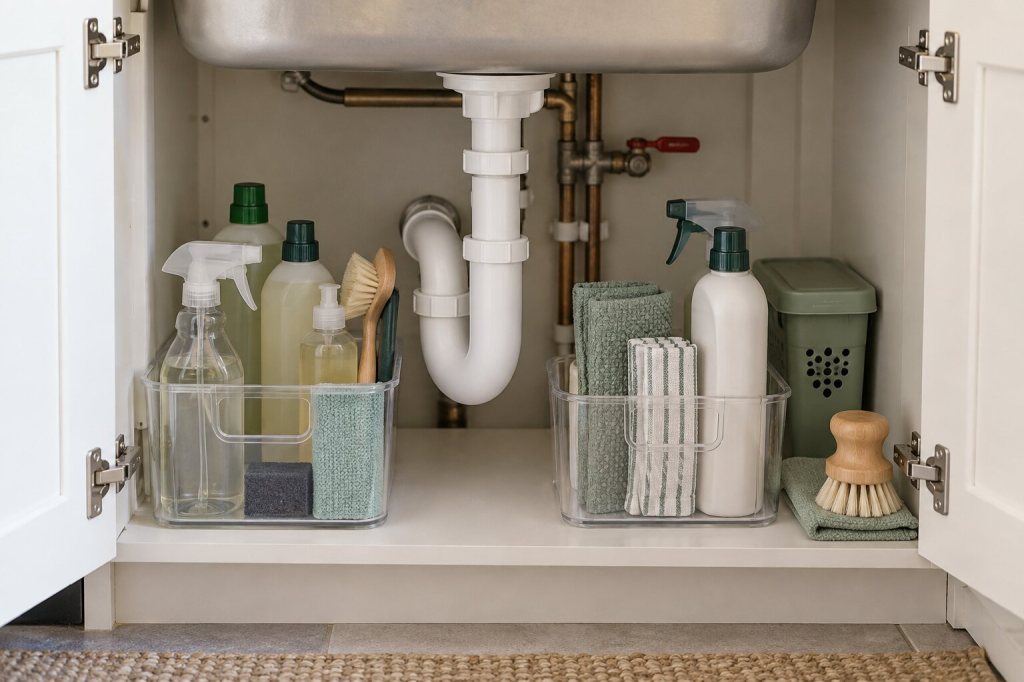
    Handled caddies and shallow trays make the cupboard easier to empty if maintenance is needed. They also contain small spills and allow you to carry a cleaning kit to another room. Select washable materials and leave air around the pipes.

    Work around the plumbing

    A narrow tension rod may hold light spray bottles in some cupboards, but it must not press against pipework or prevent access. Stackable drawers can use height, provided doors close freely and nothing strains a fitting.

    Store backups elsewhere

    The under-sink cupboard usually works best as an active-use zone, not a warehouse. Keep one open product of each type here and place bulk refills in a separate utility area if available.

    Label simply

    Broad labels such as Cloths, Dishwasher and Refills are enough. Transparent containers help you notice when stock is low without opening every box.

    Maintain the area

    Once a month, remove the caddies, check for moisture and wipe the base. Dispose of empty containers correctly and review products you no longer use. Quick access to the back of the cupboard is more valuable than maximum density.

    Safety instructions on the product label always take priority over an organising idea.


    Practical Nest UK publishes independent, practical guidance. Check measurements, materials and retailer terms before buying.

  • How to Organise Kitchen Cupboards for Everyday Cooking

    How to Organise Kitchen Cupboards for Everyday Cooking

    An organised kitchen is not one in which every packet sits in a matching jar. It is one in which the things you use together are easy to find, easy to reach and easy to put away.

    Empty one cupboard at a time

    A full kitchen emptied onto the floor creates fatigue. Choose one cupboard, remove everything, wipe the shelves and check dates. Group duplicates and move items that do not belong in that zone.

    Create activity zones

    • Tea and coffee near the kettle
    • Oils, spices and utensils near the hob
    • Baking ingredients and tools together
    • Breakfast foods in one accessible area
    • Lunch boxes, wraps and reusable bottles together

    Zones reduce repeated movement and make it easier for everyone in the household to return items correctly.

    Place by frequency and weight

    Keep everyday items between waist and eye level. Store heavy appliances on lower shelves so they can be lifted safely. Reserve the highest cupboards for light, occasional items rather than forgotten food.

    Use shelf depth wisely

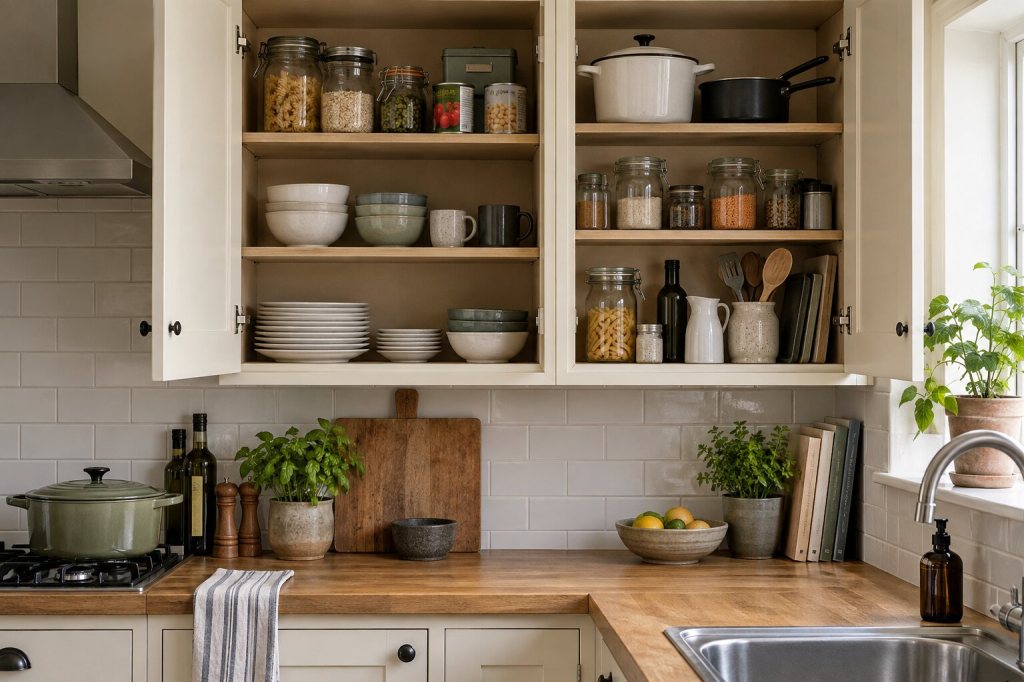
    Deep cupboards hide small packets behind one another. A turntable can help with bottles and condiments; a shallow riser can make tins visible; a pull-out basket may help on a low shelf. Choose an organiser only after measuring the cupboard and the products it needs to hold.

    Keep food visible

    Arrange packets with labels facing forwards and place newer purchases behind older ones. A small “use first” basket can prevent open packets and near-date food from disappearing. Decant only when it genuinely improves visibility or keeps food fresh.

    Manage awkward items

    Store pan lids vertically in a divider if the cupboard has enough height. Nest pans only if you can remove the one you need without dismantling a tower. Baking trays and chopping boards often work better upright than stacked.

    Set capacity limits

    A category should fit comfortably in its space. If snacks overflow their basket or mugs fill two shelves, decide which items are favourites before borrowing room from another zone.

    Label for the household

    Labels are useful when several people use the kitchen or when a category is not obvious. Simple labels such as Breakfast, Baking and Lunch Boxes are more durable than overly specific ones.

    A five-minute weekly check

    Before shopping, scan the cupboards, bring older items forwards and add only genuine gaps to the list. This small routine prevents duplicates and keeps the system useful.


    Practical Nest UK publishes independent, practical guidance. Check measurements, materials and retailer terms before buying.

  • Small Bedroom Storage Ideas That Do Not Add Visual Clutter

    Small Bedroom Storage Ideas That Do Not Add Visual Clutter

    A small bedroom needs to store a surprising number of things while still feeling restful. The best solutions are rarely more containers. They are better use of height, concealed space and clear limits for each category.

    Start with the bed

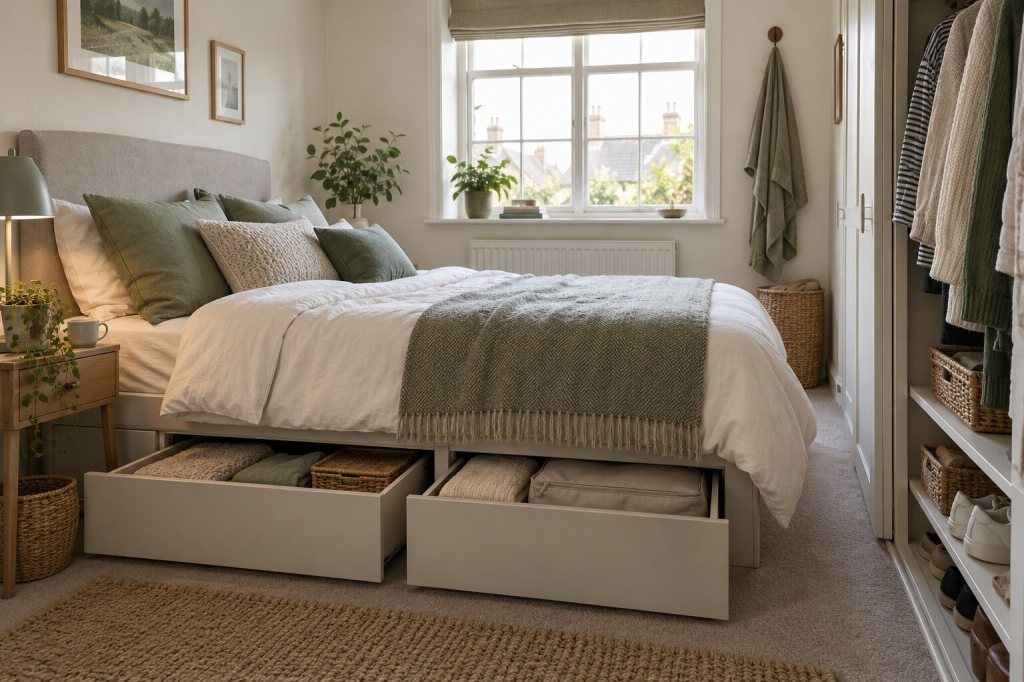
    Under-bed space can hold spare bedding, off-season clothing or occasional items. Measure the height, width and depth before buying boxes, and allow clearance for handles or wheels. Choose lidded storage if dust is a problem, but avoid filling it with things you never use.

    Make the wardrobe work harder

    • Use matching slim hangers to reduce wasted rail space
    • Add a second rail only for short garments if the layout allows
    • Place less-used items on the highest shelf in labelled boxes
    • Keep the floor clear or assign it one defined purpose
    • Store everyday clothes where they are easiest to reach

    A wardrobe is easier to maintain when each shelf has breathing room. If everything fits only when compressed, remove a category before adding organisers.

    Choose bedside storage with intent

    A bedside table with a drawer hides chargers, medication and small necessities. In very tight rooms, a narrow wall shelf can provide enough room for a lamp, phone and book without occupying much floor space.

    Use walls carefully

    Hooks behind a door can hold a dressing gown or tomorrow’s outfit. A shallow rail or a few well-positioned pegs may be more useful than a large freestanding unit. Keep wall storage visually quiet and avoid turning every vertical surface into display space.

    Control clothing in transition

    Worn-but-not-ready-to-wash clothes often become the chair pile. Give them one deliberate place: two hooks, a small basket or one section of a valet stand. The capacity limit is useful; when it is full, items must return to the wardrobe or laundry.

    Reduce visual noise

    Closed storage generally makes a small room feel calmer than many open baskets. Repeat one or two materials, keep labels discreet and leave some surfaces empty. The room should look like a bedroom, not a stockroom.

    Measure before buying

    • Internal drawer or shelf dimensions
    • Door and drawer opening clearance
    • Skirting-board depth
    • Available height beneath the bed
    • The largest item the organiser must hold

    Check whether a product’s listed dimensions are internal or external. A few centimetres can decide whether folded clothes or shoes actually fit.

    Maintain the system

    Keep a donation bag in the wardrobe and review clothing at the change of seasons. Return items to their assigned zone rather than finding another container. Small bedrooms stay functional when storage has firm boundaries.


    Practical Nest UK publishes independent, practical guidance. Check measurements, materials and retailer terms before buying.