Category: Cleaning & Home Care

Simple routines and practical advice for maintaining a clean, comfortable home.

  • How to Build a Cleaning Caddy You Will Actually Use

    How to Build a Cleaning Caddy You Will Actually Use

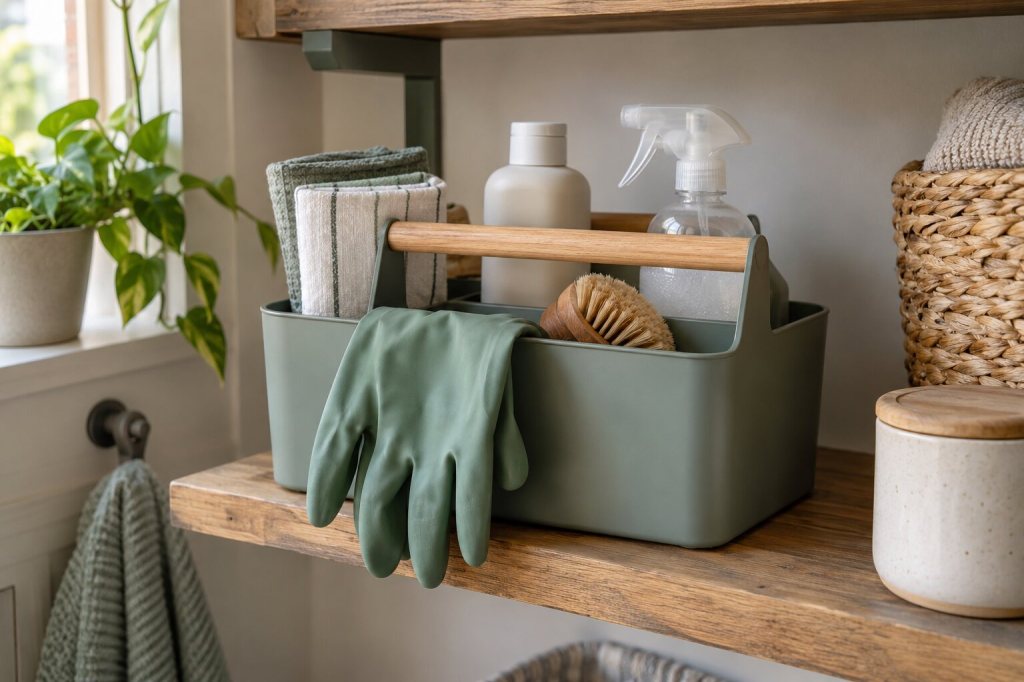
    A cleaning caddy reduces the friction of starting: the basic tools are together, visible and ready to move. The most effective version is light enough to carry and limited to products you genuinely use.

    Choose the right container

    Look for a sturdy handle, a wipe-clean surface and compartments that keep bottles upright. Check its filled weight, not just its empty size. A compact caddy is usually easier to use than a large one packed with backups.

    Start with a minimal kit

    • Microfibre or reusable cleaning cloths
    • A non-scratch sponge
    • A small detail brush or old toothbrush
    • General-purpose cleaner suitable for your surfaces
    • Glass cleaner if needed
    • Protective gloves
    • A small rubbish bag

    Different surfaces may require specific products. Check manufacturer instructions for stone, wood, screens and specialist finishes before applying a cleaner.

    Avoid unsafe combinations

    Never mix cleaning chemicals. Keep products in their original, labelled containers and follow ventilation, dilution and protective-equipment instructions. Store the caddy securely away from children and pets.

    Give cloths a system

    Use different cloth colours for different areas if that helps prevent cross-contamination. Keep clean and used cloths separate, and wash them according to their care labels. Do not return a damp cloth to a closed caddy.

    Keep bathroom tools separate when sensible

    Some households prefer a dedicated bathroom caddy. This can reduce carrying and keep toilet-area tools separate from kitchen cleaning items. A second caddy is useful only if both remain simple.

    Use a repeatable route

    Work from high to low and from cleaner areas towards dirtier ones. Collect rubbish, dust, wipe surfaces and finish with the floor. A consistent order reduces missed areas and unnecessary repetition.

    Restock lightly

    Refill or replace empty essentials after cleaning, but keep bulk bottles in secure storage. Review the caddy every month and remove unused products. If a bottle has lived there untouched for six months, it probably does not need to travel with you.

    Make starting easier

    Store the caddy near the place where cleaning usually begins. Pair it with a ten-minute reset rather than waiting for an ideal afternoon. A small kit used regularly is more effective than a perfect collection kept in a cupboard.


    Practical Nest UK publishes independent, practical guidance. Check measurements, materials and retailer terms before buying.
  • Under-Sink Organisation: A Safe and Practical Setup

    Under-Sink Organisation: A Safe and Practical Setup

    The cupboard beneath a sink is awkward by design: pipes interrupt the space, moisture is possible and cleaning products often vary in size. A safe setup begins with access and visibility, not with squeezing in as much as possible.

    Empty and inspect

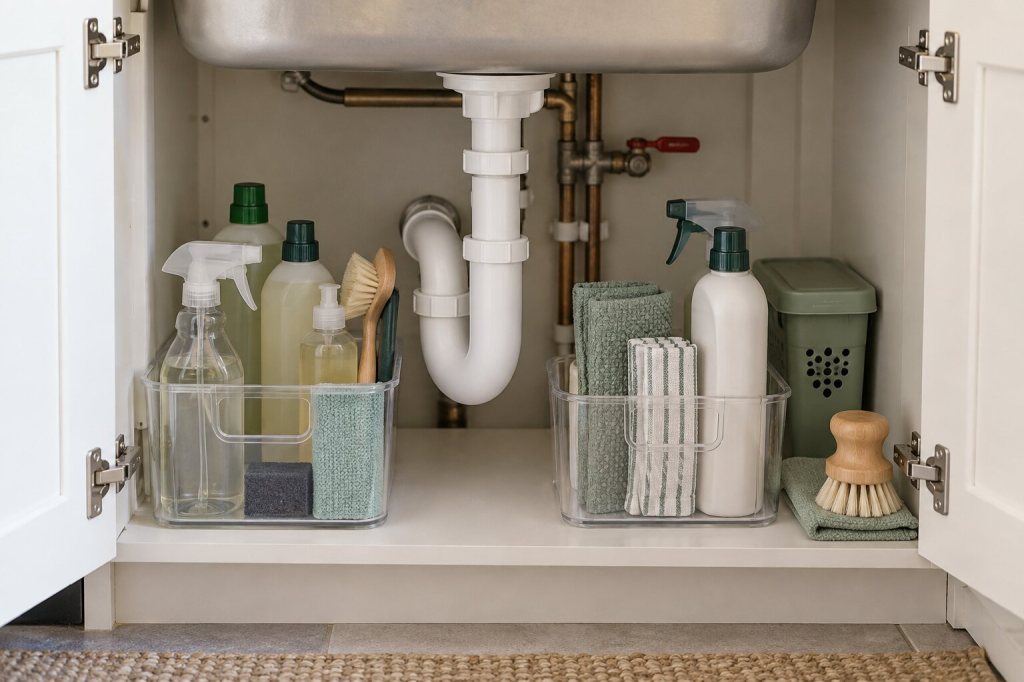
    Remove everything, check for leaks, dampness or damaged surfaces, and clean the cupboard. If there is an active leak, deal with it before adding liners or storage. Keep access to stopcocks, traps and pipework.

    Remove unsuitable items

    Do not store food, medicines or anything easily damaged by moisture beneath the sink. Follow every product label. Keep hazardous cleaning products in their original containers and out of reach of children and pets, ideally in a locked location where required.

    Group by purpose

    • Daily washing-up supplies
    • General surface cleaning
    • Dishwasher products
    • Spare sponges and cloths
    • Bin liners and small household supplies

    Avoid combining chemicals or transferring them to unlabelled bottles. Products that should not be used together must remain clearly identifiable.

    Use removable storage

    Handled caddies and shallow trays make the cupboard easier to empty if maintenance is needed. They also contain small spills and allow you to carry a cleaning kit to another room. Select washable materials and leave air around the pipes.

    Work around the plumbing

    A narrow tension rod may hold light spray bottles in some cupboards, but it must not press against pipework or prevent access. Stackable drawers can use height, provided doors close freely and nothing strains a fitting.

    Store backups elsewhere

    The under-sink cupboard usually works best as an active-use zone, not a warehouse. Keep one open product of each type here and place bulk refills in a separate utility area if available.

    Label simply

    Broad labels such as Cloths, Dishwasher and Refills are enough. Transparent containers help you notice when stock is low without opening every box.

    Maintain the area

    Once a month, remove the caddies, check for moisture and wipe the base. Dispose of empty containers correctly and review products you no longer use. Quick access to the back of the cupboard is more valuable than maximum density.

    Safety instructions on the product label always take priority over an organising idea.


    Practical Nest UK publishes independent, practical guidance. Check measurements, materials and retailer terms before buying.