Category: Product Guides

Clear buying guides focused on usefulness, value and suitability for British homes.

  • Best Under-Bed Storage for Small Bedrooms: A Practical UK Buying Guide

    Best Under-Bed Storage for Small Bedrooms: A Practical UK Buying Guide

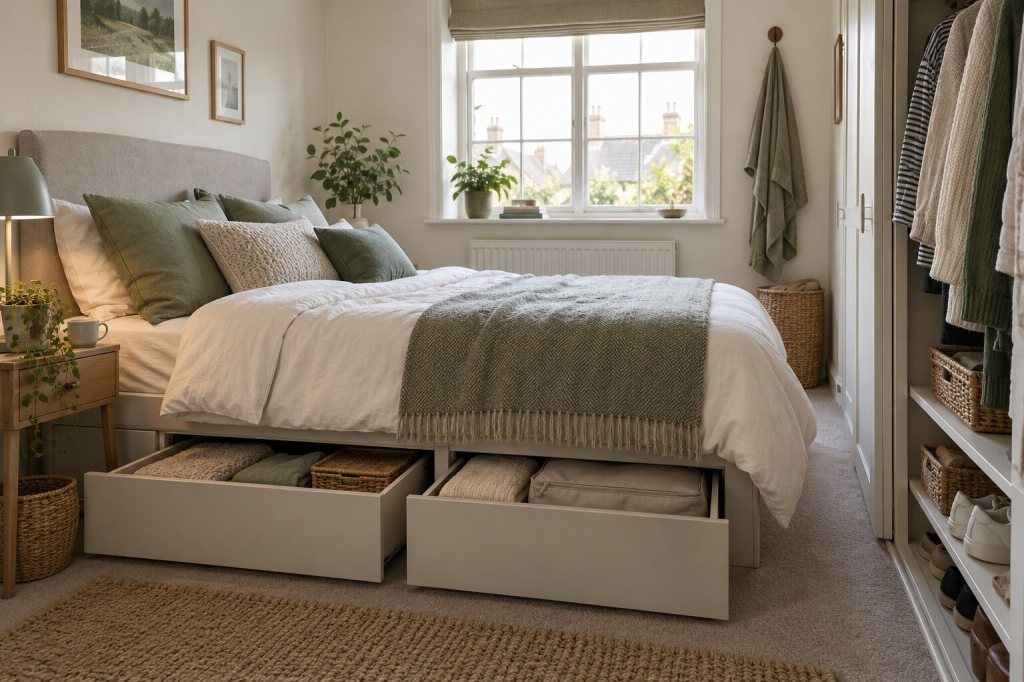
    The space beneath a bed can be valuable storage, provided the container fits, opens easily and protects what is inside. We compared five useful formats for small British bedrooms, from rigid boxes to vacuum bags and divided shoe organisers.

    The quick answer

    Choose rigid Wham boxes for wipe-clean protection, Amazon Basics fabric bags or Lifewit containers for soft furnishings, vacuum bags when maximum compression matters, and the Onlyeasy divided organiser for shoes.

    This article contains affiliate links. As an Amazon Associate I earn from qualifying purchases.

    Our five practical picks

    ProductBest forKey consideration
    Amazon Basics vacuum bagsBulky beddingLess convenient for frequent access
    Amazon Basics under-bed bagsEveryday flexible storageMeasure the filled height
    Lifewit 95L containersHigh-capacity textile storageLarge stated capacity needs enough floor space
    Wham Crystal 32L boxesRigid, wipe-clean storageRequires about 18 cm clearance
    Onlyeasy shoe organisersKeeping pairs separatedLarge footwear may use extra compartments

    1. Amazon Basics Vacuum Compression Bags

    Best for maximum space saving. This five-pack of large compression bags includes an airtight valve and hand pump. It is a useful option for duvets, spare bedding and seasonal clothes when reducing volume is more important than quick daily access.

    • Why consider it: compresses bulky textiles and includes a hand pump.
    • Watch for: not ideal for items used frequently; check care instructions before compressing delicate or feather-filled products for long periods.

    2. Amazon Basics Under-Bed Storage Bags

    Best flexible all-round option. These foldable bags are intended for clothes, blankets and other soft items. Compared with a rigid box, a fabric bag is lighter and easier to store when empty.

    • Why consider it: lightweight storage for seasonal textiles.
    • Watch for: flexible bags can bulge when overfilled, so compare the product’s external dimensions with the clear space beneath your bed.

    3. Lifewit 95L Under-Bed Storage Containers

    Best for high-capacity textile storage. The stated 95-litre capacity makes this style suitable for spare bedding, blankets and seasonal wardrobes. The broad format is useful when you want fewer, larger containers rather than several small boxes.

    • Why consider it: generous capacity for soft household items.
    • Watch for: capacity alone does not guarantee a fit—verify the current listing’s complete external dimensions before ordering.

    4. Wham Crystal 32L Under-Bed Boxes, Set of 5

    Best rigid multipack. These clear, UK-made plastic boxes have lids and a low-profile 32-litre format. At approximately 60 × 40 × 18 cm each, they suit bedding, folded clothes, toys or shoes where dust protection and wipe-clean surfaces matter. Integrated sliders help with retrieval, but they are not wheeled drawers.

    • Why consider it: five matching transparent boxes that stack with their lids fitted and nest when empty.
    • Watch for: allow more than 18 cm of clear height and check central bed supports before buying.

    5. Onlyeasy Under-Bed Shoe Organisers, Set of 2

    Best for organised footwear. This set of two divided organisers is designed to hold up to 24 pairs in total. Each bag has a clear window and a linen-look black exterior, with listed dimensions of 29.3 × 23.6 × 5.9 inches (approximately 74.4 × 59.9 × 15 cm).

    • Why consider it: separate compartments keep pairs visible and stop shoes forming a loose pile.
    • Watch for: the stated capacity depends on footwear size; boots and bulky trainers may need more than one compartment.

    Measure before you shop

    Measure from the floor to the lowest part of the bed frame—not to the mattress. Check usable width and depth, allowing for a central support, skirting boards and bedside furniture. Leaving 2–3 cm of height clearance makes a container easier to retrieve without scraping the frame.

    • Clear height: must exceed the product’s external height.
    • Access direction: decide whether the container will pull out from the side or foot.
    • Floor type: small wheels or sliders behave differently on hard flooring and deep carpet.
    • Contents: rigid boxes protect crushable items; flexible bags suit textiles.

    Frequently asked questions

    Should under-bed storage be airtight?

    Not always. Store only clean, fully dry textiles. A sealed container can trap moisture that is already present.

    Are wheels worth having?

    They can help with heavy contents and frequent access, although very small wheels may struggle on deep carpet. Smooth integrated sliders are another option.

    What should not be stored under a bed?

    Avoid food, damp textiles, valuables, important documents and objects sensitive to changing temperature or humidity. Keep enough access to clean and inspect the area.


    Product specifications, availability and prices can change. Check the current Amazon listing and measure your space before purchasing. Practical Nest UK has not presented these products as personally tested.
  • Renter-Friendly Storage Ideas That Leave Walls and Floors Intact

    Renter-Friendly Storage Ideas That Leave Walls and Floors Intact

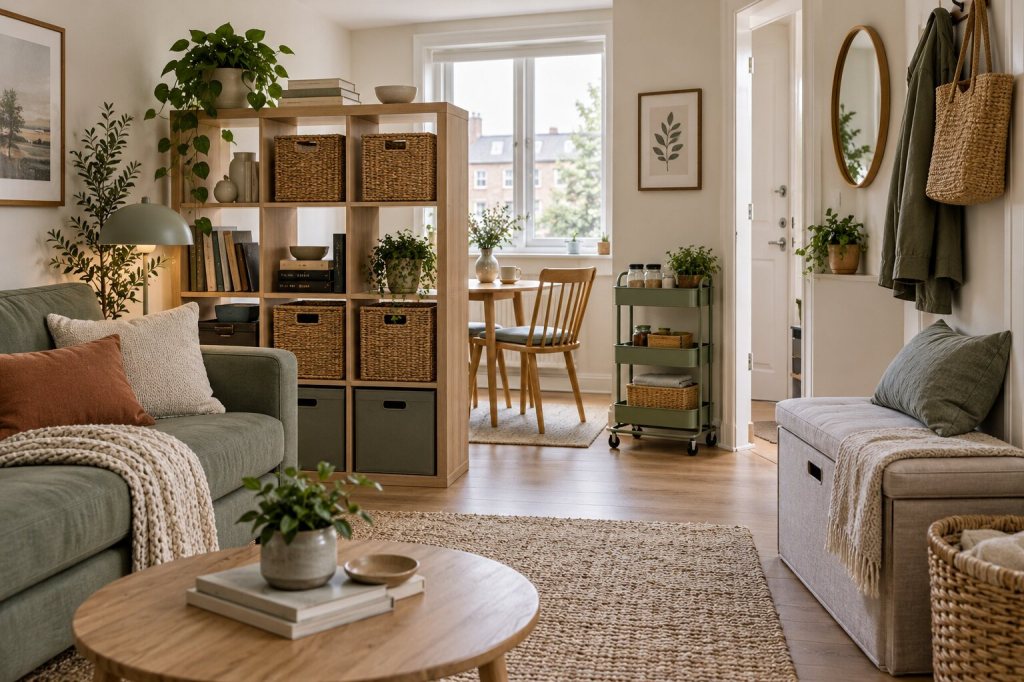
    Renters often need more storage without permanent building work. The useful approach is to improve capacity with reversible solutions while protecting surfaces and following the tenancy agreement.

    Check the agreement first

    Before drilling, fixing furniture or applying adhesive products, check your tenancy terms and ask the landlord or agent when necessary. Even products described as removable can mark paint, wallpaper or varnish, so test them discreetly.

    Use freestanding height

    A tall, narrow shelving unit can add capacity without a large footprint. Stability is essential: follow the manufacturer’s anchoring guidance, consider the wall material and obtain permission for required fixings. An unanchored tall unit may be unsafe.

    Improve existing cupboards

    • Removable shelf risers
    • Freestanding drawer units
    • Handled baskets for deep shelves
    • Non-fixed pan or lid racks
    • Tension rails used within their stated load limits

    Measure hinges, pipes and door closure as well as the empty shelf. Keep ventilation openings and maintenance access clear.

    Choose over-door storage carefully

    An over-door organiser can work for light items, but check door thickness, frame clearance and hinge capacity. Padding may reduce rubbing. Stop using it if the door strains, fails to close or becomes a safety concern.

    Select dual-purpose furniture

    A storage bench, drawer bed or coffee table with concealed capacity can reduce the number of pieces in a room. Confirm dimensions along the access route before buying and consider whether the item can move to a future home.

    Create zones with portable pieces

    A trolley can hold craft supplies, bathroom products or a home-working kit and move when needed. Boxes that fit standard shelving are easier to reuse than custom organisers designed for one awkward gap.

    Protect floors and surfaces

    Use suitable furniture pads and follow flooring-care guidance. Avoid trapping moisture beneath plastic storage, and do not overload suspended floors or shelves. Keep photographic records of the property’s condition where appropriate.

    Buy for the next home too

    Flexible dimensions, neutral finishes and replaceable components make storage more likely to survive a move. Before purchasing, ask whether the item solves a current daily problem and whether you would choose it again in a different room.

    Keep the system light

    Moving is easier when storage does not become permission to accumulate. Review each category before adding a container and keep some spare capacity for normal changes.


    Practical Nest UK publishes independent, practical guidance. Check measurements, materials and retailer terms before buying.

  • How to Choose Storage Boxes That Actually Fit Your Space

    How to Choose Storage Boxes That Actually Fit Your Space

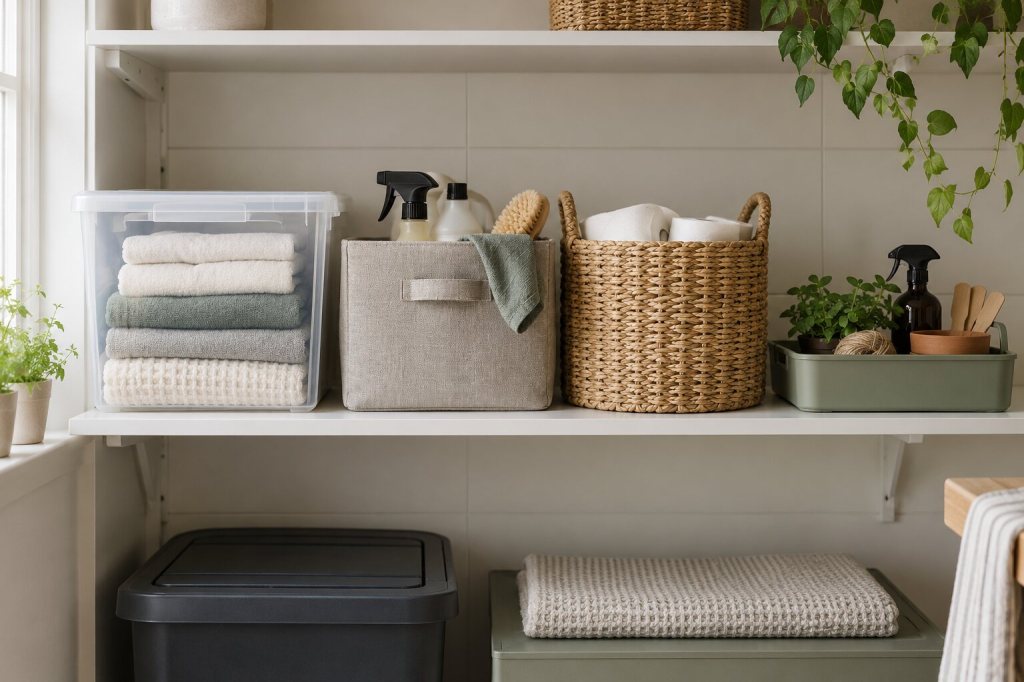
    Storage boxes are useful only when they fit both the space and the job. A beautiful set that wastes half a shelf or hides frequently used items can make organisation harder. Start with the contents and the location, then choose the container.

    Measure three times

    • The available width, depth and height
    • Door, drawer or shelf-opening clearance
    • The internal dimensions required by the contents

    Product listings usually emphasise external dimensions. Thick walls, tapered sides, wheels and lids can reduce usable capacity. Leave enough clearance to grip and remove the box.

    Match access to frequency

    Open baskets suit frequently used, low-risk items. Lidded boxes protect occasional items from dust. Drawers can make stacked storage accessible without unbuilding a tower. Vacuum bags reduce soft-textile volume but may not suit every material.

    Choose material for the location

    Wipe-clean plastic can be practical in utility areas or under sinks, provided products are stored safely. Breathable fabric may suit dry wardrobe shelves. Cardboard is inexpensive but less suitable where moisture is possible. Natural baskets add texture but can snag delicate items and are often harder to clean.

    Think about visibility

    Transparent boxes reveal contents but can look busy. Opaque boxes create visual calm but need clear labels. A useful compromise is an opaque basket with a simple category label.

    Test stacking claims

    Check whether the box is designed to stack when full and whether the lid bears weight safely. Consider how you will reach the lowest container. Heavy items belong lower down, and tall stacks should never create a tipping risk.

    Avoid buying a complete set first

    Test one or two boxes in the real space. Load them, open the cupboard, remove them and put them back. If the system works for a week, buy only the additional quantity required.

    Calculate value properly

    Compare usable internal capacity, build quality, replacement availability and how often the box will be handled. The cheapest option is poor value if it cracks, deforms or cannot be cleaned. The most expensive option is unnecessary if a simple tray solves the problem.

    Label for future you

    Use categories rather than vague labels. “Winter accessories” is more useful than “Miscellaneous”. Date boxes containing children’s outgrown clothes or time-sensitive paperwork so that they are reviewed rather than forgotten.

    The right container makes retrieval easier. It should not merely make clutter rectangular.


    Practical Nest UK publishes independent, practical guidance. Check measurements, materials and retailer terms before buying.