
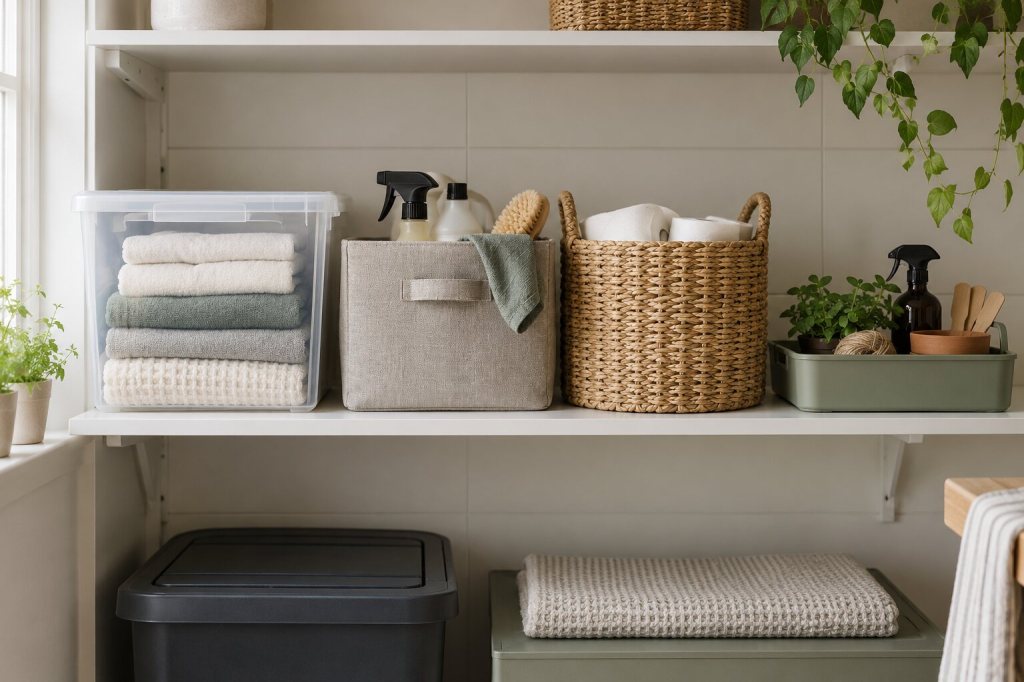
Storage boxes are useful only when they fit both the space and the job. A beautiful set that wastes half a shelf or hides frequently used items can make organisation harder. Start with the contents and the location, then choose the container.
Measure three times
- The available width, depth and height
- Door, drawer or shelf-opening clearance
- The internal dimensions required by the contents
Product listings usually emphasise external dimensions. Thick walls, tapered sides, wheels and lids can reduce usable capacity. Leave enough clearance to grip and remove the box.
Match access to frequency
Open baskets suit frequently used, low-risk items. Lidded boxes protect occasional items from dust. Drawers can make stacked storage accessible without unbuilding a tower. Vacuum bags reduce soft-textile volume but may not suit every material.
Choose material for the location
Wipe-clean plastic can be practical in utility areas or under sinks, provided products are stored safely. Breathable fabric may suit dry wardrobe shelves. Cardboard is inexpensive but less suitable where moisture is possible. Natural baskets add texture but can snag delicate items and are often harder to clean.
Think about visibility
Transparent boxes reveal contents but can look busy. Opaque boxes create visual calm but need clear labels. A useful compromise is an opaque basket with a simple category label.
Test stacking claims
Check whether the box is designed to stack when full and whether the lid bears weight safely. Consider how you will reach the lowest container. Heavy items belong lower down, and tall stacks should never create a tipping risk.
Avoid buying a complete set first
Test one or two boxes in the real space. Load them, open the cupboard, remove them and put them back. If the system works for a week, buy only the additional quantity required.
Calculate value properly
Compare usable internal capacity, build quality, replacement availability and how often the box will be handled. The cheapest option is poor value if it cracks, deforms or cannot be cleaned. The most expensive option is unnecessary if a simple tray solves the problem.
Label for future you
Use categories rather than vague labels. “Winter accessories” is more useful than “Miscellaneous”. Date boxes containing children’s outgrown clothes or time-sensitive paperwork so that they are reviewed rather than forgotten.
The right container makes retrieval easier. It should not merely make clutter rectangular.
Practical Nest UK publishes independent, practical guidance. Check measurements, materials and retailer terms before buying.
 Practical Nest UK