
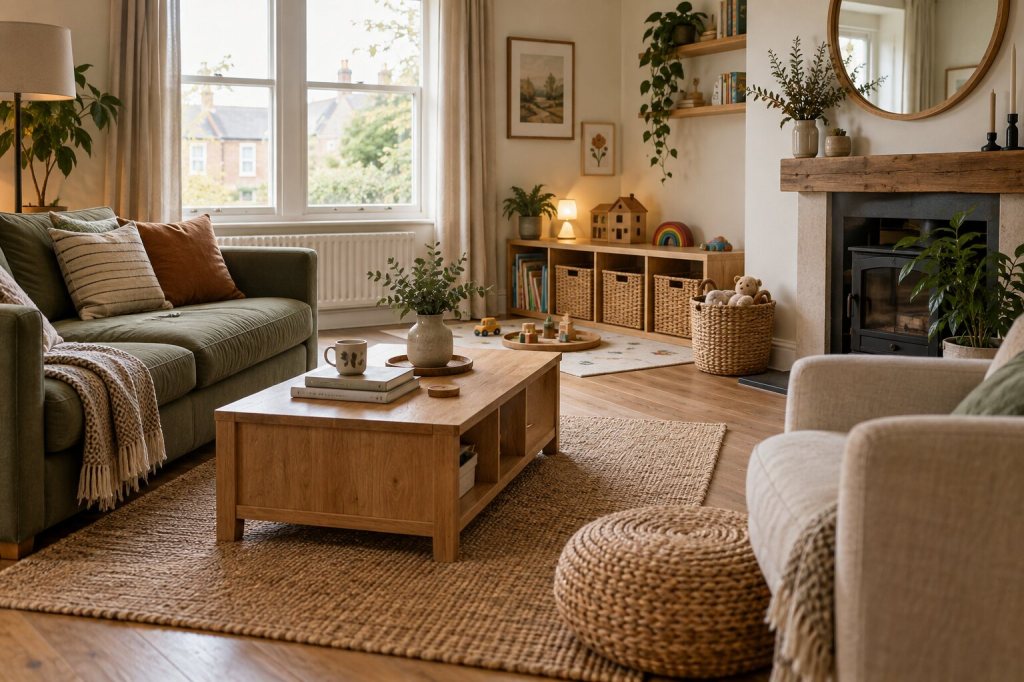
A shared living room needs to work for play and for adult life. The goal is not to make toys invisible all day. It is to give children meaningful access while making the room straightforward to reset.
Reduce before organising
Remove broken toys, incomplete sets and items that are no longer age-appropriate. Keep favourites and open-ended toys easy to reach. Store sentimental items separately from everyday playthings.
Use broad categories
- Building toys
- Vehicles
- Pretend play
- Puzzles and games
- Creative supplies
- Soft toys
Very specific sorting creates too many decisions during tidy-up. Broad groups make it possible for a child to help and reduce the number of containers needed.
Choose low, stable storage
Low units allow children to see and return toys independently. Follow the furniture manufacturer’s instructions for wall fixing and loading. Avoid heavy objects on high shelves, unstable stacks and containers with lids that trap small fingers.
Prefer fewer open choices
Displaying every toy at once can make play and tidying harder. Keep a manageable selection available and rotate less-used items from secure storage. Rotation does not need a schedule; swap when interest drops.
Use containers children can handle
Lightweight baskets with open tops or easy handles reduce friction. A picture label can help younger children. Check that materials and dimensions are appropriate for the child’s age and that small components are stored safely.
Protect the adult zone
Choose one boundary, such as a cabinet, two shelves or a defined corner. When the allocated area is full, rotate or reduce rather than extending storage across the room.
Create a simple reset
Use a short cue before dinner or bedtime and tidy one category at a time. Adults can gather pieces while children return baskets. Five consistent minutes are more effective than an occasional, exhausting sort.
Allow play to continue
Not every construction must be dismantled immediately. A tray or small designated surface can hold one work in progress. This respects the play while keeping the floor and main surfaces usable.
Toy storage must always suit the child’s age and follow product safety and anchoring instructions.
Practical Nest UK publishes independent, practical guidance. Check measurements, materials and retailer terms before buying.
 Practical Nest UK