
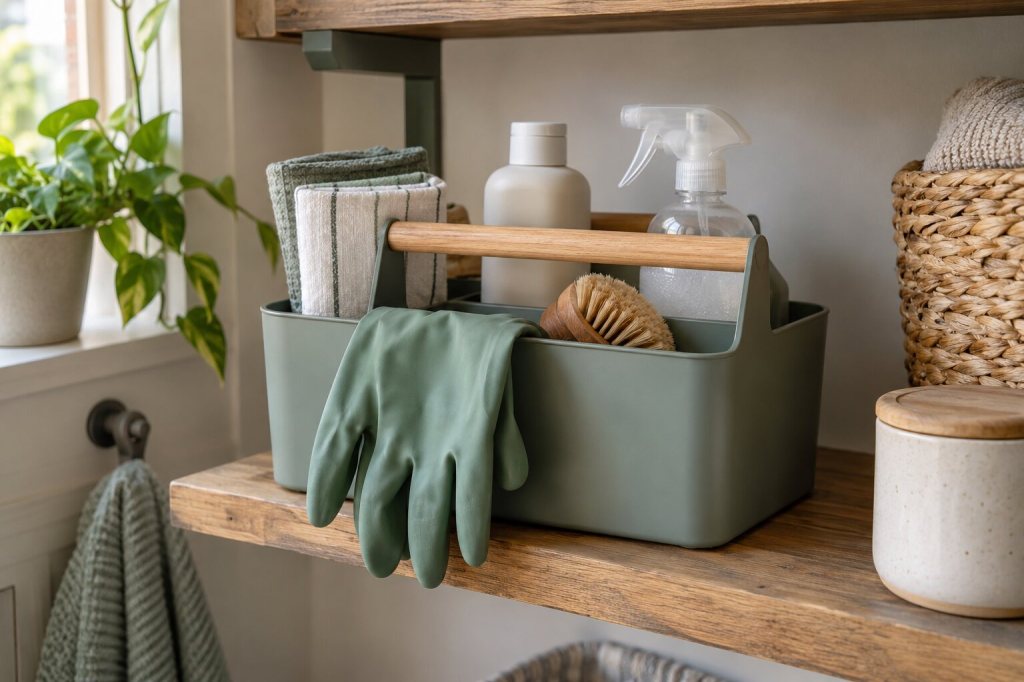
A cleaning caddy reduces the friction of starting: the basic tools are together, visible and ready to move. The most effective version is light enough to carry and limited to products you genuinely use.
Choose the right container
Look for a sturdy handle, a wipe-clean surface and compartments that keep bottles upright. Check its filled weight, not just its empty size. A compact caddy is usually easier to use than a large one packed with backups.
Start with a minimal kit
- Microfibre or reusable cleaning cloths
- A non-scratch sponge
- A small detail brush or old toothbrush
- General-purpose cleaner suitable for your surfaces
- Glass cleaner if needed
- Protective gloves
- A small rubbish bag
Different surfaces may require specific products. Check manufacturer instructions for stone, wood, screens and specialist finishes before applying a cleaner.
Avoid unsafe combinations
Never mix cleaning chemicals. Keep products in their original, labelled containers and follow ventilation, dilution and protective-equipment instructions. Store the caddy securely away from children and pets.
Give cloths a system
Use different cloth colours for different areas if that helps prevent cross-contamination. Keep clean and used cloths separate, and wash them according to their care labels. Do not return a damp cloth to a closed caddy.
Keep bathroom tools separate when sensible
Some households prefer a dedicated bathroom caddy. This can reduce carrying and keep toilet-area tools separate from kitchen cleaning items. A second caddy is useful only if both remain simple.
Use a repeatable route
Work from high to low and from cleaner areas towards dirtier ones. Collect rubbish, dust, wipe surfaces and finish with the floor. A consistent order reduces missed areas and unnecessary repetition.
Restock lightly
Refill or replace empty essentials after cleaning, but keep bulk bottles in secure storage. Review the caddy every month and remove unused products. If a bottle has lived there untouched for six months, it probably does not need to travel with you.
Make starting easier
Store the caddy near the place where cleaning usually begins. Pair it with a ten-minute reset rather than waiting for an ideal afternoon. A small kit used regularly is more effective than a perfect collection kept in a cupboard.
Practical Nest UK publishes independent, practical guidance. Check measurements, materials and retailer terms before buying.
 Practical Nest UK