
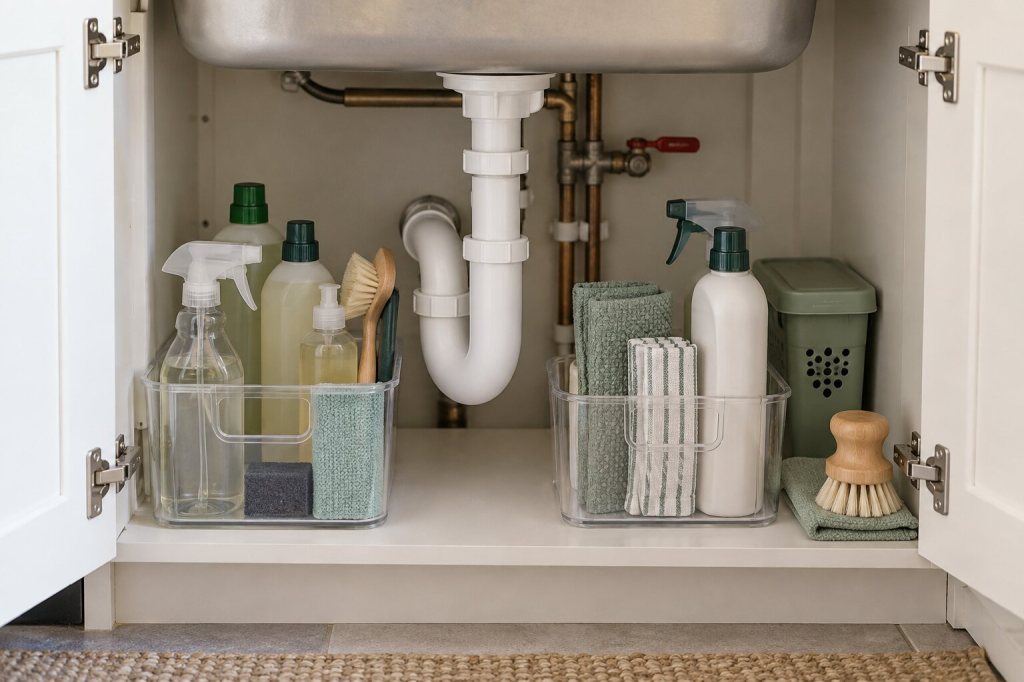
The cupboard beneath a sink is awkward by design: pipes interrupt the space, moisture is possible and cleaning products often vary in size. A safe setup begins with access and visibility, not with squeezing in as much as possible.
Empty and inspect
Remove everything, check for leaks, dampness or damaged surfaces, and clean the cupboard. If there is an active leak, deal with it before adding liners or storage. Keep access to stopcocks, traps and pipework.
Remove unsuitable items
Do not store food, medicines or anything easily damaged by moisture beneath the sink. Follow every product label. Keep hazardous cleaning products in their original containers and out of reach of children and pets, ideally in a locked location where required.
Group by purpose
- Daily washing-up supplies
- General surface cleaning
- Dishwasher products
- Spare sponges and cloths
- Bin liners and small household supplies
Avoid combining chemicals or transferring them to unlabelled bottles. Products that should not be used together must remain clearly identifiable.
Use removable storage
Handled caddies and shallow trays make the cupboard easier to empty if maintenance is needed. They also contain small spills and allow you to carry a cleaning kit to another room. Select washable materials and leave air around the pipes.
Work around the plumbing
A narrow tension rod may hold light spray bottles in some cupboards, but it must not press against pipework or prevent access. Stackable drawers can use height, provided doors close freely and nothing strains a fitting.
Store backups elsewhere
The under-sink cupboard usually works best as an active-use zone, not a warehouse. Keep one open product of each type here and place bulk refills in a separate utility area if available.
Label simply
Broad labels such as Cloths, Dishwasher and Refills are enough. Transparent containers help you notice when stock is low without opening every box.
Maintain the area
Once a month, remove the caddies, check for moisture and wipe the base. Dispose of empty containers correctly and review products you no longer use. Quick access to the back of the cupboard is more valuable than maximum density.
Safety instructions on the product label always take priority over an organising idea.
Practical Nest UK publishes independent, practical guidance. Check measurements, materials and retailer terms before buying.
 Practical Nest UK