
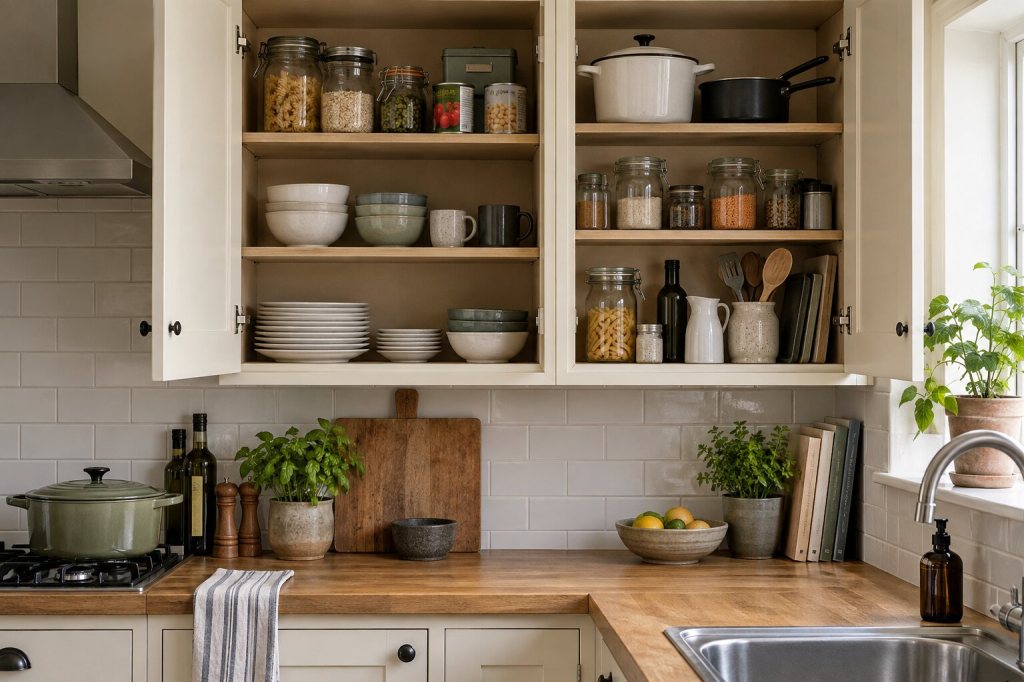
An organised kitchen is not one in which every packet sits in a matching jar. It is one in which the things you use together are easy to find, easy to reach and easy to put away.
Empty one cupboard at a time
A full kitchen emptied onto the floor creates fatigue. Choose one cupboard, remove everything, wipe the shelves and check dates. Group duplicates and move items that do not belong in that zone.
Create activity zones
- Tea and coffee near the kettle
- Oils, spices and utensils near the hob
- Baking ingredients and tools together
- Breakfast foods in one accessible area
- Lunch boxes, wraps and reusable bottles together
Zones reduce repeated movement and make it easier for everyone in the household to return items correctly.
Place by frequency and weight
Keep everyday items between waist and eye level. Store heavy appliances on lower shelves so they can be lifted safely. Reserve the highest cupboards for light, occasional items rather than forgotten food.
Use shelf depth wisely
Deep cupboards hide small packets behind one another. A turntable can help with bottles and condiments; a shallow riser can make tins visible; a pull-out basket may help on a low shelf. Choose an organiser only after measuring the cupboard and the products it needs to hold.
Keep food visible
Arrange packets with labels facing forwards and place newer purchases behind older ones. A small “use first” basket can prevent open packets and near-date food from disappearing. Decant only when it genuinely improves visibility or keeps food fresh.
Manage awkward items
Store pan lids vertically in a divider if the cupboard has enough height. Nest pans only if you can remove the one you need without dismantling a tower. Baking trays and chopping boards often work better upright than stacked.
Set capacity limits
A category should fit comfortably in its space. If snacks overflow their basket or mugs fill two shelves, decide which items are favourites before borrowing room from another zone.
Label for the household
Labels are useful when several people use the kitchen or when a category is not obvious. Simple labels such as Breakfast, Baking and Lunch Boxes are more durable than overly specific ones.
A five-minute weekly check
Before shopping, scan the cupboards, bring older items forwards and add only genuine gaps to the list. This small routine prevents duplicates and keeps the system useful.
Practical Nest UK publishes independent, practical guidance. Check measurements, materials and retailer terms before buying.
 Practical Nest UK