
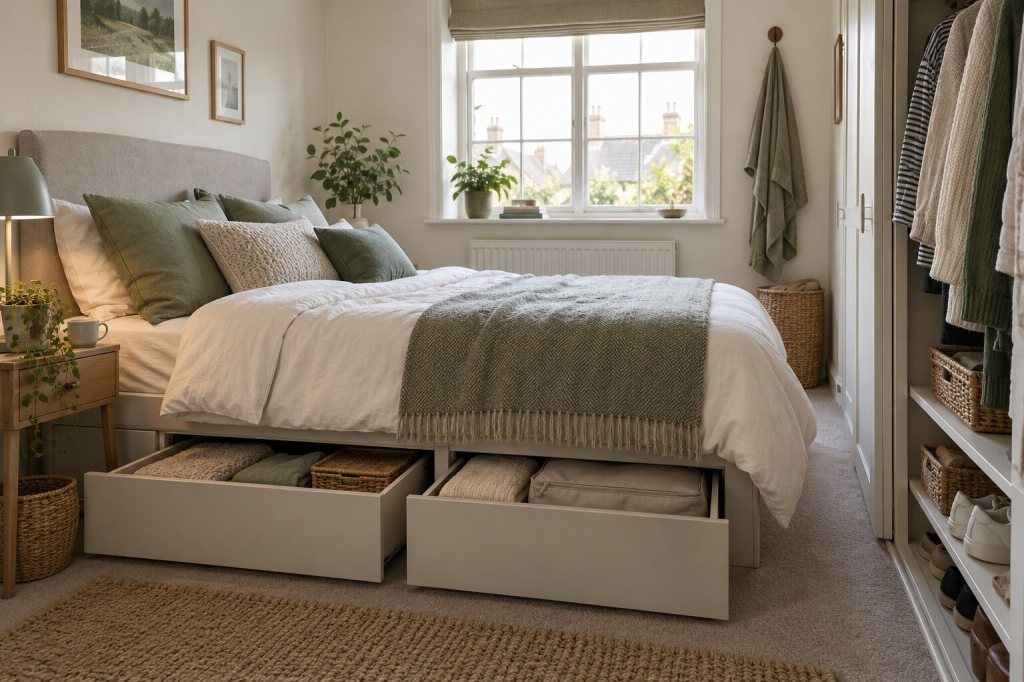
A small bedroom needs to store a surprising number of things while still feeling restful. The best solutions are rarely more containers. They are better use of height, concealed space and clear limits for each category.
Start with the bed
Under-bed space can hold spare bedding, off-season clothing or occasional items. Measure the height, width and depth before buying boxes, and allow clearance for handles or wheels. Choose lidded storage if dust is a problem, but avoid filling it with things you never use.
Make the wardrobe work harder
- Use matching slim hangers to reduce wasted rail space
- Add a second rail only for short garments if the layout allows
- Place less-used items on the highest shelf in labelled boxes
- Keep the floor clear or assign it one defined purpose
- Store everyday clothes where they are easiest to reach
A wardrobe is easier to maintain when each shelf has breathing room. If everything fits only when compressed, remove a category before adding organisers.
Choose bedside storage with intent
A bedside table with a drawer hides chargers, medication and small necessities. In very tight rooms, a narrow wall shelf can provide enough room for a lamp, phone and book without occupying much floor space.
Use walls carefully
Hooks behind a door can hold a dressing gown or tomorrow’s outfit. A shallow rail or a few well-positioned pegs may be more useful than a large freestanding unit. Keep wall storage visually quiet and avoid turning every vertical surface into display space.
Control clothing in transition
Worn-but-not-ready-to-wash clothes often become the chair pile. Give them one deliberate place: two hooks, a small basket or one section of a valet stand. The capacity limit is useful; when it is full, items must return to the wardrobe or laundry.
Reduce visual noise
Closed storage generally makes a small room feel calmer than many open baskets. Repeat one or two materials, keep labels discreet and leave some surfaces empty. The room should look like a bedroom, not a stockroom.
Measure before buying
- Internal drawer or shelf dimensions
- Door and drawer opening clearance
- Skirting-board depth
- Available height beneath the bed
- The largest item the organiser must hold
Check whether a product’s listed dimensions are internal or external. A few centimetres can decide whether folded clothes or shoes actually fit.
Maintain the system
Keep a donation bag in the wardrobe and review clothing at the change of seasons. Return items to their assigned zone rather than finding another container. Small bedrooms stay functional when storage has firm boundaries.
Practical Nest UK publishes independent, practical guidance. Check measurements, materials and retailer terms before buying.
 Practical Nest UK